Bathroom Colour Ideas: 9 Shades That Work in Real Light
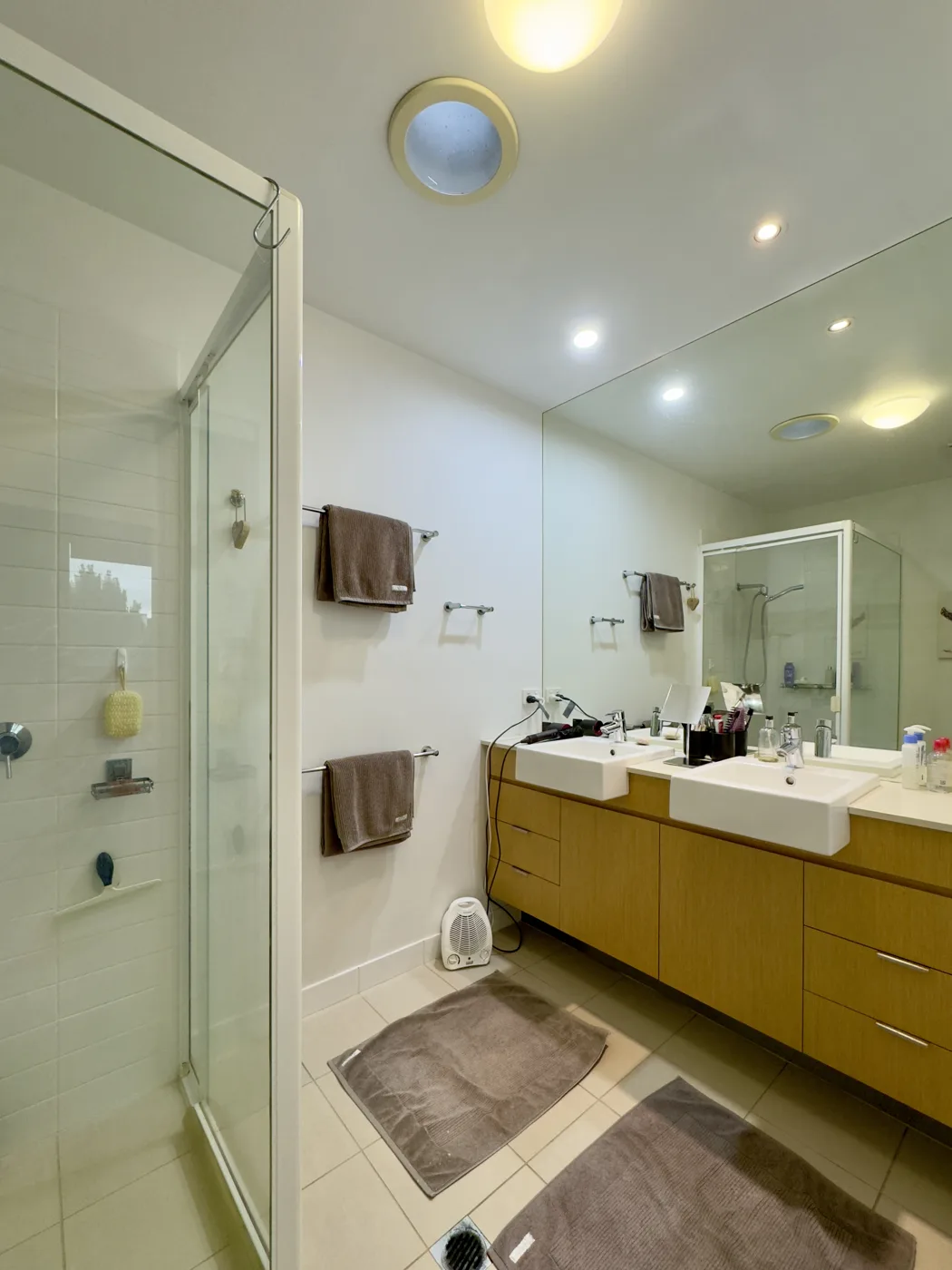
Most bathroom colour ideas fail for the same reason: they were chosen from a photograph of somebody else’s south-facing room. A bathroom is usually the smallest, dampest and worst-lit space in a British house, often with one small window or none at all, and colour behaves very differently there than it does on a swatch card under a showroom spotlight.
This guide works the other way round. Start with the light your bathroom actually has, then pick the shade, then pick the finish that will survive the steam. The colours below are all real, currently available UK paints, chosen because they hold up in the conditions rather than because they photograph well.
First, work out what light you are dealing with
Walk into the bathroom at two in the afternoon with the light off and look at the wall opposite the window.
- North-facing or shaded: the light is cool and blue-grey all day. Cool colours go flat and grey here. You need warmth in the pigment to compensate.
- South or west-facing: warm, strong light, often golden in the afternoon. Warm colours can go orange. Cooler shades hold their character.
- Windowless (most en suites and downstairs loos): there is no natural light at all, so the colour is entirely at the mercy of your bulbs. Buy 2700K to 3000K lamps with a colour rendering index of 90 or above before you buy paint, because a cheap bulb will wreck an expensive colour.
Then buy sample pots rather than sample cards, paint two coats on a piece of lining paper, and move it around the room across a full day. Colour in a bathroom changes more between morning and evening than in any other room in the house.
Small bathrooms: light, warm and single-toned
The old advice was white. The better advice is one warm, soft colour taken across walls and ceiling, because a break at the cornice line is what makes a small room feel small.
Setting Plaster (Farrow & Ball) is the shade designers keep returning to for compact bathrooms. It is a muted, dusty pink with enough warmth to stop a north-facing room going cold, and it sits well with both modern white sanitaryware and old-fashioned patterned tiles. It flatters skin tones in a mirror, which matters more than people expect in a room you get ready in.
Elephant’s Breath (Farrow & Ball) is the safer version of the same idea: a warm grey with a hint of magenta that reads as a soft neutral without the dead flatness of a plain grey. If you want a neutral that does not look builder-spec, this is it.
Take either colour over the ceiling too, and keep the woodwork within a couple of shades of the walls. See our small bathroom design ideas for the layout side of the same problem.
Bathrooms with real daylight: go deeper
If you have a decent window, a small room is the best possible place to be brave. You are not going to live in it for eight hours, so a saturated colour that would be exhausting in a living room is a pleasure here.
Calke Green (Farrow & Ball) is the most reliable deep green for bathrooms: muted, slightly grey, and it does not turn minty in artificial light the way brighter greens do. It works beautifully against brass or unlacquered brass fittings, which are still the dominant metal finish in British bathroom design.
Card Room Green (Farrow & Ball) is the darker, greyer sibling and suits a room with panelling to dado height. Green paint above, painted tongue-and-groove below, is one of the most forgiving schemes there is because the panelling takes the splashes.
Railings (Farrow & Ball) is a blue-black rather than a true black, and it is the shade to use if you want a dark bathroom without the space feeling like a cave. It reads as very dark navy in daylight and near-black at night. Pair it with a pale floor, not a dark one. Our black bathroom ideas page goes further into the dark end.
The 2026 colour: indigo blue
Dulux named a family of three indigo blues as its Colours of the Year 2026 rather than a single shade, under the name Rhythm of Blues: the dark Slow Swing, the airy light Mellow Flow, and the more vivid Free Groove. The full set is on Dulux’s Colours of the Year 2026 page.
Blue is a natural fit for a bathroom, but there is a trap. In a north-facing room, cool blue plus cool daylight equals a space that feels genuinely cold, and it will make the room feel colder than it is even with the towel rail on. If your bathroom faces north and you want blue, use the lightest of the three on the walls and put the dark one on the vanity or the panelling, where it becomes a feature rather than an atmosphere.
Borrowed Light (Farrow & Ball) is the alternative for a bathroom with weak light: a very pale blue with enough grey to stay soft, which behaves in low light where a purer blue would not.
Windowless bathrooms and downstairs loos: stop fighting it
A room with no window will never feel airy, and painting it brilliant white just gives you a bright, flat box. The far better move in a cloakroom is to lean into the enclosure with a dark, rich colour or a bold paper, and put your money into lighting and a decent mirror.
Pigeon (Farrow & Ball) is the middle path: a grey-blue with green in it, dark enough to feel deliberate but not so dark that a small windowless room becomes gloomy. It is one of the most-used colours in British bathrooms for good reason.
Whatever you choose, a windowless room needs its extract fan working properly. Approved Document F sets an intermittent extract rate of 15 litres per second for a bathroom, and a fan that has been painted over or has never been ducted properly is the actual reason your paint is going mouldy, not the colour. The Approved Document F guidance has the figures.
Colours to be careful with
Cool mid-grey. The default British bathroom colour of the last decade, and the one that ages worst. In poor light it goes lifeless, and against white sanitaryware it can look dirty. If you want grey, pick one with a warm base. Our grey bathroom ideas page has warmer options.
Bright white on every surface. Manufacturers’ white sanitaryware is a specific, cold white, and a warm white wall next to it makes the bath look yellow while a cool white wall makes the room feel clinical. If you are going white, hold a sample against the actual bath before you commit.
Strong yellow. It is the hardest colour to get right in artificial light, and bathroom lighting is almost always artificial at the times you use the room most.
The finish matters as much as the colour
A bathroom colour is only as good as the paint carrying it. Flat matt emulsion in a steamy room will mark, and it will grow mould in the corners.
Dulux Easycare Bathroom Soft Sheen is the specialist option: a moisture and steam resistant emulsion whose mould-resistant formulation is warranted to protect against mould for five years. Leave six hours between coats and a full 24 hours before you let the room get steamy again, which means no showers on the day you paint.
Farrow & Ball Modern Emulsion is the route if you want their colours in a durable finish. It is a washable matt with 7% sheen and a preservative added to protect against mould, and Farrow & Ball recommends it specifically for high-moisture rooms. Detail is on their Modern Emulsion page. For the wall directly beside a shower, a dedicated bathroom paint still buys you more margin.
We compare products in more depth in best bathroom paint UK.
Putting a scheme together
A scheme that works usually has three parts, not nine.
- One wall colour taken over the ceiling in a small room, or stopped at the cornice in a taller one.
- One woodwork tone, either the same colour in an eggshell finish or a deliberate contrast on panelling.
- One metal, carried through taps, shower, towel rail and handles. Mixing brass and chrome is the single most common thing that makes a well-chosen colour scheme look unresolved.
Tiles count as a colour, not a background. If you have beige or cream tiles you are keeping, choose the paint to sit with them rather than against them; our beige bathroom tiles guide covers which shades work. For period properties, Victorian bathroom ideas sets out the historically plausible palette.
Frequently asked questions
What are the best bathroom colour ideas for a small bathroom? One warm, light colour taken across walls and ceiling, with woodwork close to the wall tone. Setting Plaster and Elephant’s Breath both work because they carry warmth without being strong. Avoid a contrasting ceiling, which visually lowers the room.
What colour makes a bathroom look bigger? Continuity does more than any single colour. A light, warm shade on every surface including the ceiling removes the visual break lines that tell the eye where the walls stop. A pale floor helps more than pale walls do.
Is grey still a good bathroom colour? Warm greys are. Cool mid-greys have dated badly and go lifeless in poor light, particularly in north-facing rooms. If you want the same restraint, a warm grey such as Elephant’s Breath keeps the neutrality without the flatness.
What colour should I paint a bathroom with no window? Either commit to a rich, dark colour and light it properly, or use a soft mid-tone such as Pigeon. Brilliant white in a windowless room reads as flat and clinical. Get 2700K to 3000K bulbs with a CRI of 90 or above before deciding.
Can I use normal emulsion in a bathroom? You can, but it will mark and it is more likely to grow mould around the shower and window reveal. A bathroom-specific soft sheen such as Dulux Easycare Bathroom, or Farrow & Ball’s Modern Emulsion, has mould protection built in.
What is the 2026 bathroom colour trend? Indigo blue. Dulux named three of them together as its Colours of the Year 2026: Slow Swing, Mellow Flow and Free Groove. Earthy greens remain the other strong direction. Check your room’s aspect first, because blue in a north-facing bathroom can feel cold.
The Folio
Want more like this in your inbox?
One considered idea for your London home, every Thursday.
SubscribeMore from KDS London
All guides
How Much Does an Interior Designer Cost in London in 2026?
What interior designers charge in London in 2026: hourly rates, day rates, per-room fees and percentage models, with real figures and what each one buys you.
Read
Navy Kitchen Ideas: Blue, Teal and Cobalt Cabinet Designs
Navy kitchen ideas that work: the best blue cabinet shades, worktop and hardware pairings, and how to use navy, teal and cobalt without dating the room.
Read
Gold and Brass Bathroom Accessories: How to Style Warm Metallics
How to choose and style gold bathroom accessories and brass fittings, from brushed vs polished finishes to mixing metals and avoiding tarnish.
Read